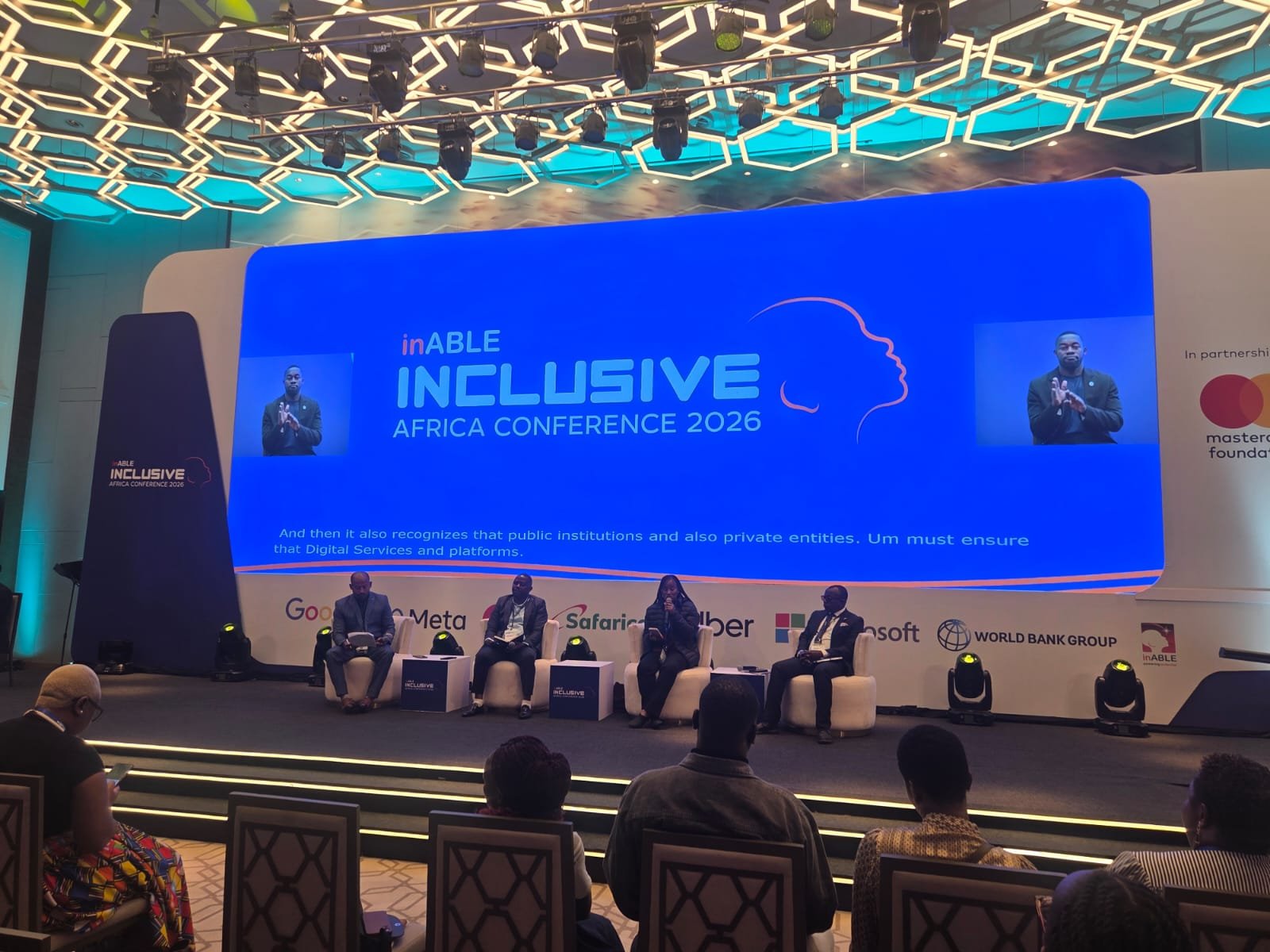
The African Disability Forum (ADF) played a leading role in advancing the conversation on digital inclusion during the second day of the Inclusive Africa Conference 2026, held in Nairobi, Kenya, from 2–4 June 2026. ADF Senior Programme Manager, Abebaw Abebe, moderated a high-level panel discussion titled “Digital Accessibility in Africa: Gains, Gaps and the Road Ahead,” bringing together disability leaders from Kenya, Uganda, and Rwanda to reflect on progress made, the barriers that remain, and the priorities ahead.
The panel featured Sally Nduta, Chief Executive Officer of the United Disabled Persons of Kenya (UDPK), Ninsiima John Chris, Director of Programmes at the National Union of Disabled Persons of Uganda (NUDIPU), and Jean Damascene, Executive Secretary of the National Union of Disability Organizations in Rwanda (NUDOR).
Opening the discussion, Abebaw noted that Africa’s digital transformation offers enormous opportunities for education, employment, healthcare, finance, and public services. However, he stressed that persons with disabilities are still being left behind because digital systems, platforms, and services are often inaccessible.
“Africa’s digital future cannot be considered inclusive if persons with disabilities continue to face barriers accessing the systems and services that increasingly shape everyday life,” he said.
The panel discussed both progress and persistent challenges. In recent years, governments, development partners, technology companies, and organizations of persons with disabilities have increasingly recognized digital accessibility as a key part of inclusion. Countries across the continent have made progress through improved disability laws, greater awareness of accessibility standards, and stronger engagement of organizations of persons with disabilities in digital policy processes.
At the same time, the gap between policy and practice remains wide. Many laws and standards exist on paper, but implementation and enforcement are still weak. As a result, inaccessible websites, mobile applications, digital learning platforms, online banking services, and public information systems continue to exclude many persons with disabilities.
The panelists also highlighted the role of organizations of persons with disabilities in driving change. Through sustained advocacy and engagement with governments, private sector actors, and development partners, OPDs have helped place accessibility higher on national and regional agendas.
A central message of the discussion was that meaningful participation must go beyond consultation. Persons with disabilities and their representative organizations should be involved from the earliest stages of planning, design, testing, implementation, and evaluation of digital products and services. This co-design approach is essential to building systems that work for everyone.
The discussion also looked ahead to the implications of artificial intelligence and other emerging technologies. While these innovations offer new possibilities, the panel warned that they could deepen exclusion if accessibility is not built in from the start.
Participants called on governments, technology companies, development partners, and digital service providers to make accessibility a foundational requirement in Africa’s digital ecosystem. They also emphasized the need for stronger accountability, greater investment in inclusive technology, and more consistent collaboration with organizations of persons with disabilities.
Closing the session, Abebaw reaffirmed ADF’s commitment to working with its member organizations, governments, development partners, and technology stakeholders to advance digital accessibility across the continent.
“Accessibility is not simply about technology; it is about participation, dignity, and ensuring that Africa’s digital future includes everyone,” he said.
ADF extends its appreciation to the Inclusive Africa Conference organizers, the panelists, and all participants who contributed to this important conversation on building a more inclusive digital Africa.