The Road from Addis Ababa to Belém, Brazil
The African Disability Forum (ADF) continued to strengthen its advocacy for disability-inclusive climate actions throughout 2025. Building on its initial participation during the Twenty-Seventh Conference of the Parties (COP27) in Sharm El-Sheikh, Egypt, ADF expanded its engagement to regional commitment and contribution at global disability inclusive climate platforms. These engagements facilitate meaningful participation and representation of persons with disabilities in disability inclusive early warning system, mitigation strategies and disability inclusive finance for adaptation as well as climate negotiations, policies, and decision-making processes.
Regional Engagement and Achievements
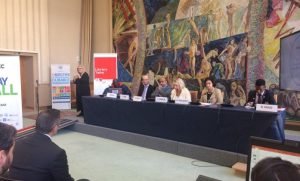
ADF’s engagement with the United Nations Economic Commission for Africa’s (UNECA) African Climate Policy Centre and its participation at the Thirteenth Conference on Climate Change and Development in Africa (CCDA-XIII) marked a significant milestone. Held from 5–7 September 2025, as a pre-summit to the Second Africa Climate Summit under the theme “Empowering Africa’s Climate Action with Science, Finance, and Justice,” the conference concluded with a disability-inclusive Outcome Document that, at least, features three explicit references to persons with disabilities for the first time.
Key achievements included:
- The first-time participation of the ADF Secretariat delegation
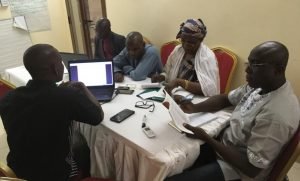
- Mobilization and technical support provision to the participation of National Umbrella Organizations of Persons with Disabilities (OPDs); and local disability non-government organization
- Successful co-organization of the hybrid side event titled “Leave No One Behind: The Intersect Between Climate, Disability, and Gender” and collaboration with UNCEF, WFP and ADF members.
Engagement at CoP30: Week Two Participation
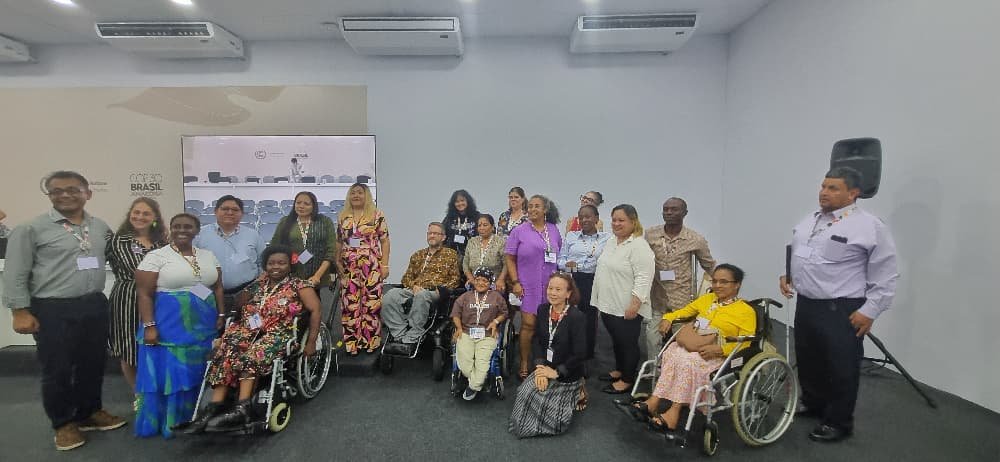
During the second week of the conference, ADF actively participated and contributed to the effort of demanding for formal recognition of the Disability Caucus as a constituency under the United Nations Framework Convention on Climate Change (UNFCCC). Notable contributions included:
- Collaborating with International Disability Alliance (IDA) and other Disability Caucus members to coordinate and promote disability inclusion;
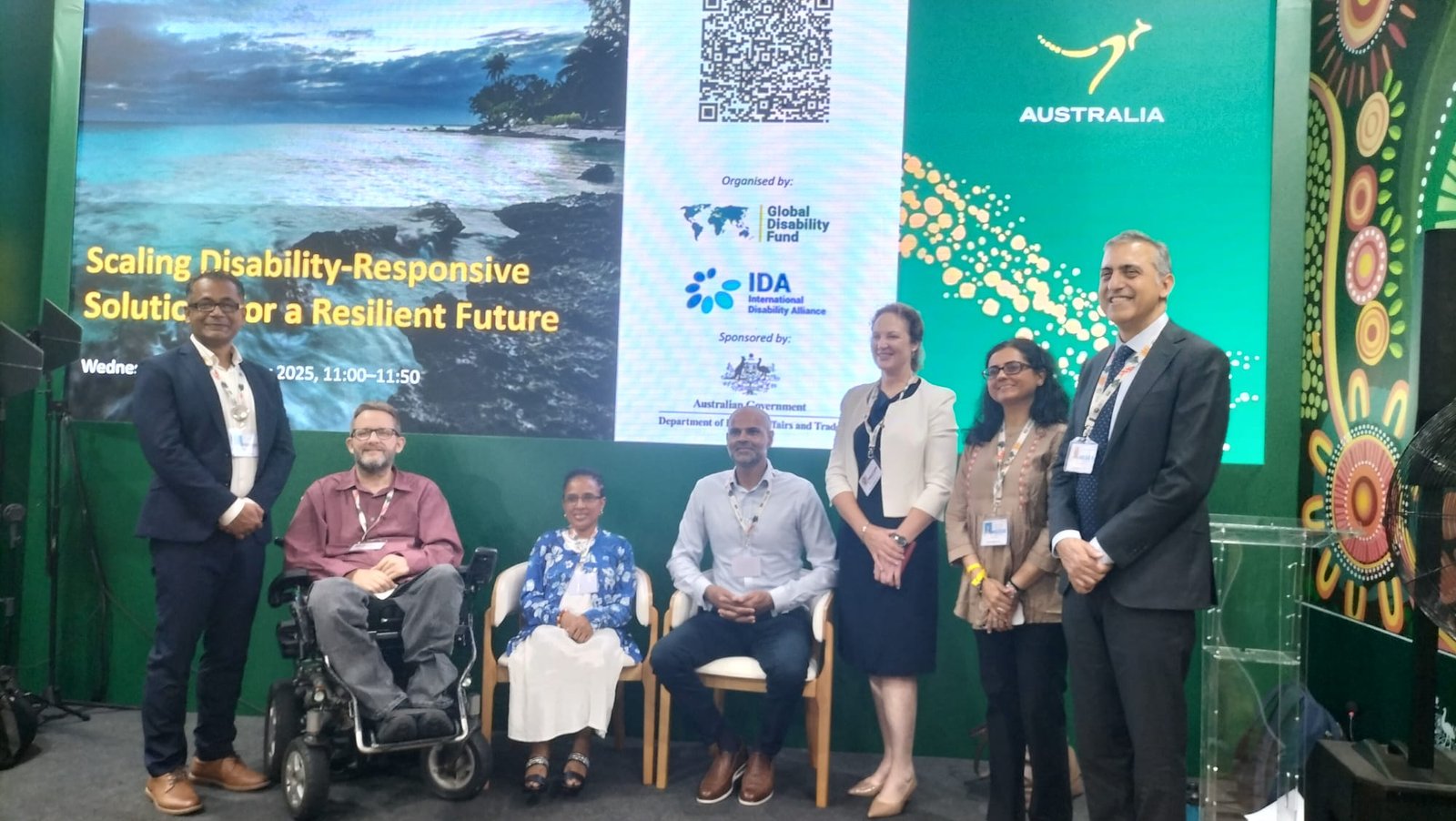
- Speaking at the Global Disability Fund side event titled “Scaling Disability-Responsive Solutions for a Resilient Future”;
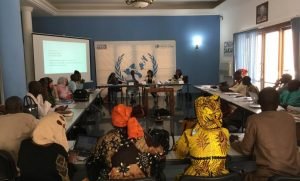
- Facilitating OPDs participation at the Consortium for Climate Change Ethiopia (CCC-E) and Pan African Climate Justice Alliance (PACJA) side event on “People with Disabilities and Climate Action: Experiences from Ethiopia, Kenya, Nigeria, Senegal, and Burkina Faso” where Mr. Bonface Massah, Executive Director of the Africa Albinism Network and the Commissioner at the Malawi Human Rights Commission featured;
- Chairing part of the Disability Caucus Daily Review Meeting;
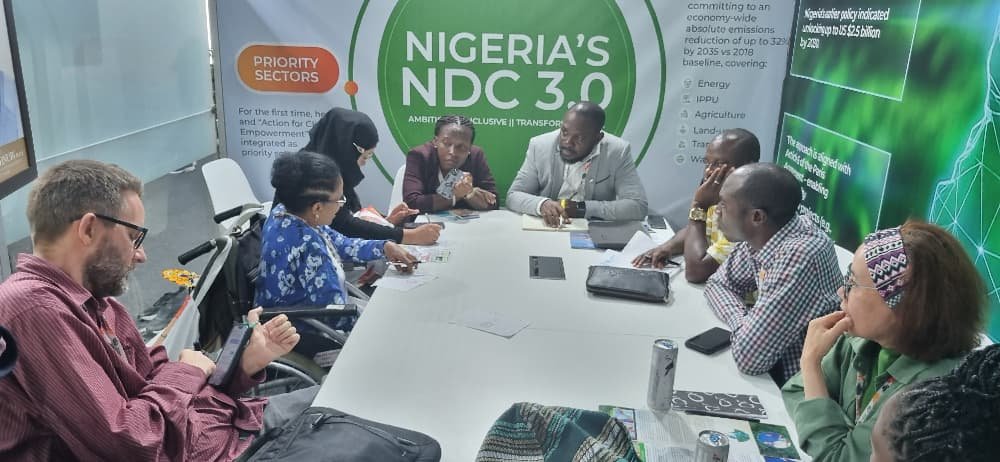
- Meeting with the Nigerian delegation, together with JONAPWD representatives, to advocate for formal recognition of the Disability Caucus constituency;
- Participating in key technical and thematic side events, including:
- Urban Planning Policy to Boost Equity, Mobility, Physical and Mental Health in the Context of Climate Change
- Bridging the Gender Gap: Advancing Gender Equality in Climate Action
- Opportunity Cost of African Expenditures on Climate Change
- undertaking targeted lobby and policy advocacy engagements with UNECA and the African Development Bank (AfDB).
Strategic Partnerships
ADF’s advocacy efforts were undertaken in collaboration with key partners, including:
- the International Disability Alliance (IDA)
- UNECA’s Africa Climate Policy Centre
- Pan-African Climate Justice Alliance (PACJA)
- Development Initiatives
- Disability Climate Caucus
- National umbrella member organizations of Persons with Disabilities (OPDs) and other stakeholders.
Institutional Commitment
ADF remains committed to advancing the rights and inclusion of persons with disabilities in regional and global climate and development processes. This includes continued advocacy for:
- Recognition of the Disability Caucus as a formal UNFCCC constituency;
- Inclusion of disability rights into climate policies, legal frameworks, and financing instruments; and
Disability-inclusive development to reduce poverty and mitigate the impacts of climate