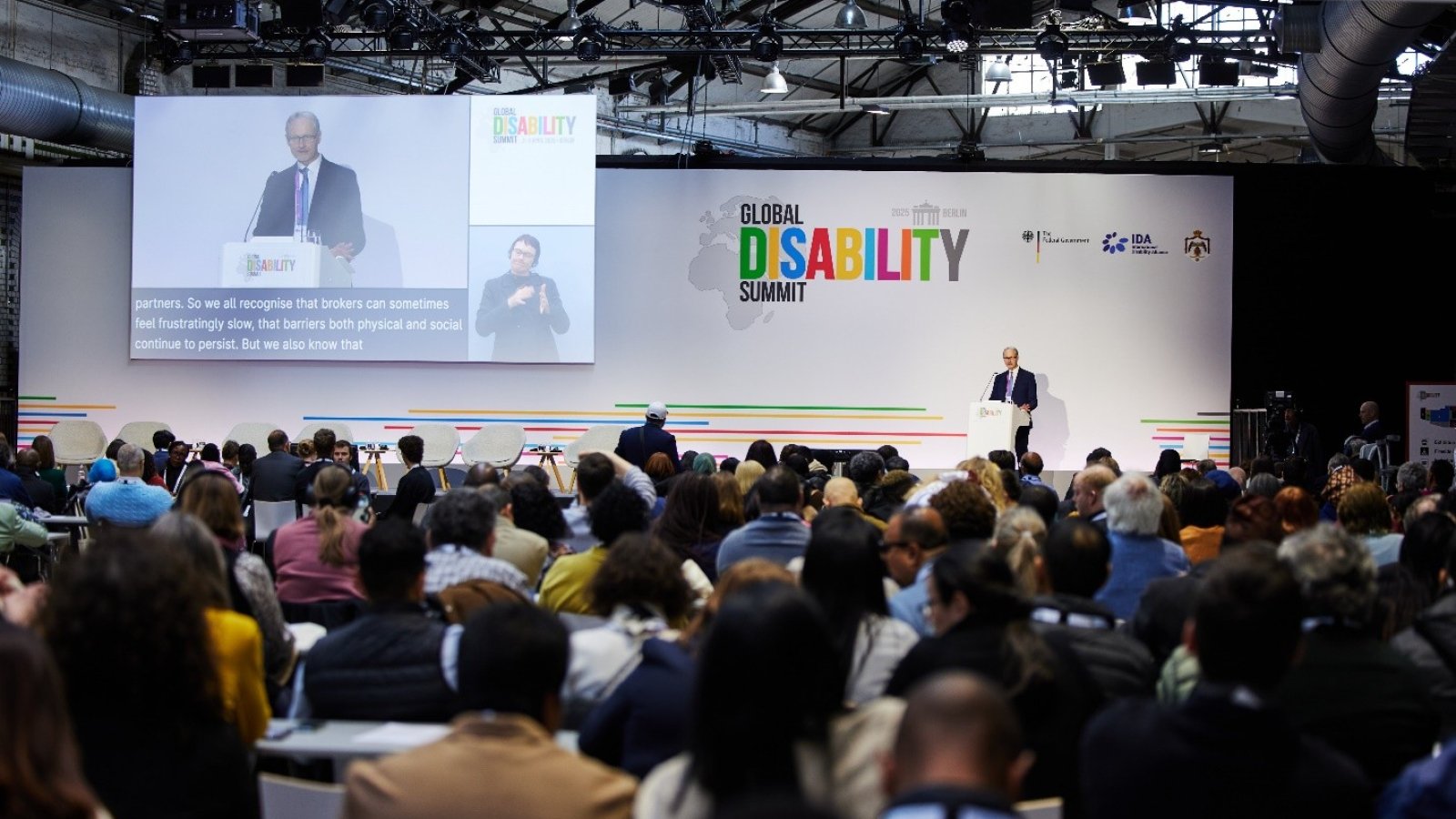
A speaker addresses a large audience at the 2025 Global Disability Summit in Berlin. The stage backdrop displays the summit’s logo along with partner logos, including the German Federal Government, IDA, and the Hashemite Kingdom of Jordan. A large screen projects the speaker's image with live captions and a sign language interpreter. The audience is seated and engaged, reflecting the event’s inclusive and international nature.

ADVOCACY FOR ENDORSEMENT OF THE AMMAN-BERLIN DECLARATION ON GLOBAL DISABILITY INCLUSION

On 2–3 April 2025, the Global Disability Summit in Berlin brought together more than 4,700 participants—including government representatives, civil society organizations, experts, and advocates—to explore the transformative potential of disability inclusion. The summit concluded with the adoption of the Amman-Berlin Declaration on Global Disability Inclusion, a landmark document outlining a comprehensive, human rights-based framework to ensure persons with disabilities are fully and equally integrated into every facet of public life.

Despite the clear mandate and robust commitments in the Declaration, fewer than 20 African governments have endorsed it to date. Given Africa’s potential to benefit significantly from a disability-inclusive development agenda, this advocacy brief calls on all African governments, intergovernmental bodies, and key stakeholders to join the global movement by endorsing the Declaration and taking decisive, meaningful action.

African nations are uniquely positioned to lead on disability inclusion by leveraging regional solidarity and embracing the principles embodied in the Declaration. These principles include:

  • Upholding International Human Rights Commitments:
    The Declaration builds on the near-universal ratification of the Convention on the Rights of Persons with Disabilities (CRPD). Endorsing the Declaration signals a renewed and unequivocal commitment to ensuring that persons with disabilities enjoy the same rights and opportunities as others.
  • Accelerating National Development:
    Disability-inclusive policies are not only about rights—they are key drivers of social and economic progress. Inclusive development and humanitarian programming allow nations to harness the full potential of all citizens, spurring innovation and reducing poverty and inequality.
  • Advancing the Sustainable Development Goals (SDGs):
    The global pledge to “leave no one behind” is intrinsically linked to disability inclusion. African countries are urged to embed these values in their national and regional development strategies to accelerate progress toward the SDGs.
  • Enhancing Disaster, Conflict, and Crisis Response:
    In a world marked by increasingly frequent crises—natural disasters, conflicts, and health emergencies—ensuring humanitarian responses are inclusive and accessible to persons with disabilities is essential for protecting vulnerable populations.

Key Commitments of the Amman-Berlin Declaration

The Declaration outlines pivotal commitments that serve as benchmarks for national policy, including:

  1. Inclusion of Disability in International and National Programs:
    Governments commit to making all international development programs accessible to persons with disabilities and aligned with non-discrimination and equal opportunity principles.
  2. The “15 Percent for the 15 Percent” Initiative:
    This commitment calls for dedicating at least 15% of development and humanitarian funding to disability inclusion, ensuring equitable access and targeted investments.
  3. Meaningful Participation of Organizations of Persons with Disabilities (OPDs):
    The Declaration reinforces the importance of including OPDs in the planning, design, and evaluation of all relevant policies and programs, ensuring decisions are informed by lived experience.
  4. Addressing Intersectional Discrimination:
    The Declaration emphasizes dismantling barriers faced by groups experiencing multiple forms of discrimination—including women, children, and youth with disabilities—through intersectional policy approaches.
  5. Multi-Stakeholder Partnerships:
    It calls for active collaboration among governments, civil society, the private sector, academia, and trade unions to pool resources, drive research, and foster innovation in disability inclusion.
  6. Data-Driven Policy Making:
    The Declaration underscores the importance of robust data collection and evidence to inform policy design, implementation, and monitoring in both development and humanitarian contexts.

Why Must Africa Endorse the Declaration?

By endorsing the Declaration, African governments can unlock numerous benefits:

  • Strengthened Human Rights Protections:
    Endorsement signals that the rights of persons with disabilities are a national priority, fulfilling international obligations and accelerating domestic legal and policy reforms.
  • Enhanced Social and Economic Opportunities:
    Inclusive approaches build more diverse and productive societies. Empowering every citizen to contribute fully strengthens economies and fosters resilience.
  • Improved Crisis Management and Resilience:
    Inclusive disaster risk reduction and humanitarian responses ensure that no one is left behind during crises, making societies more adaptive and prepared.
  • Catalyzing Pan-African Solidarity:
    With only a handful of African nations having endorsed the Declaration, a united and coordinated continental response is urgently needed. Endorsement demonstrates leadership and sets a standard for best practices across the continent.

Urgent Actions for African Governments and Stakeholders

ADF urges all African governments, regional bodies such as the African Union, and stakeholders across development, humanitarian, and civil society sectors to:

  • Publicly Endorse the Amman-Berlin Declaration:
    Join the growing number of governments committed to this progressive agenda. A formal endorsement will affirm your nation’s leadership in advancing disability rights.
  • Integrate Disability Inclusion into National Legislation and Policies:
    Translate the Declaration’s principles into concrete actions by revising laws, budgets, and development plans to ensure disability inclusion is central to national agendas and international partnerships.
  • Strengthen Support for OPDs:
    Provide the resources and platforms OPDs need to engage meaningfully in decision-making processes. Establish structured mechanisms for collaboration between government bodies and OPDs.
  • Commit Resources to the “15 Percent” Target:
    Allocate or reallocate funding to ensure at least 15% of development and humanitarian efforts address disability inclusion, aiming for full implementation by 2028.
  • Foster Multi-Stakeholder Collaboration:
    Build strategic alliances among government, civil society, academia, and the private sector to share best practices, drive innovation, and mobilize funding for inclusive programs.
  • Implement Rigorous Data Collection and Monitoring:
    Develop systems to capture, analyze, and report on disability inclusion efforts. Data-driven monitoring will strengthen accountability and improve policy outcomes over time.

Together, let us build an Africa—and a world—where no one is left behind.
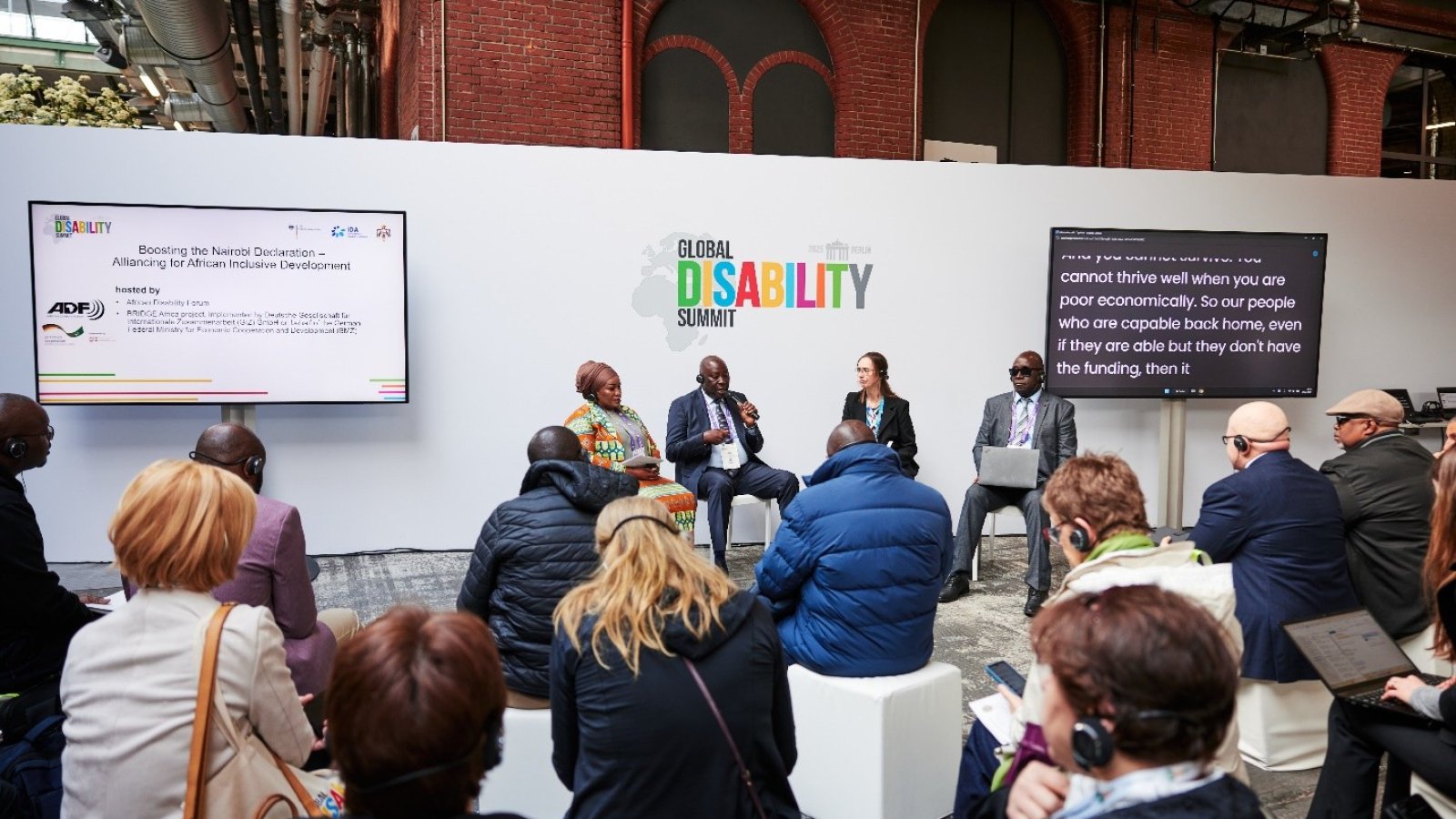
A panel discussion at the Global Disability Summit 2025 in Berlin features four speakers seated in front of a white backdrop with the summit’s colorful logo. The session, titled “Boosting the Nairobi Declaration – Alliancing for African Inclusive Development,” is hosted by the African Disability Forum (ADF) and partners, as shown on a screen to the left. Attendees, some wearing headsets for interpretation, are seated and listening intently. A second screen displays live captions of the speaker’s dialogue. The venue has an industrial design with exposed pipes and brick walls.

STATEMENT OF THE AFRICAN DISABILITY FORUM FOLLOWING THE GLOBAL DISABILITY SUMMIT 2025

The African Disability Forum (ADF), as the regional umbrella organization representing persons with disabilities across the continent, proudly endorses the Amman-Berlin Declaration on Global Disability Inclusion, adopted at the Third Global Disability Summit held in Berlin from 2–3 April 2025.

This historic gathering of over 4,700 stakeholders—including governments, civil society, and organizations of persons with disabilities (OPDs)—reaffirmed a collective commitment to accelerating disability inclusion worldwide. As the representative voice of over 80 million Africans with disabilities, ADF recognizes the Declaration as a vital step in advancing the rights and inclusion of more than 1 billion persons with disabilities globally.

The Amman-Berlin Declaration reflects ADF’s mission to dismantle systemic barriers and foster equal opportunities for persons with disabilities across Africa. We highlight the following continental priorities:

1. A Bold Target for Inclusive Development

The Declaration’s call to allocate at least 15% of international development cooperation to disability inclusion by 2028 is a transformative commitment. In Africa, where persons with disabilities face disproportionate barriers, this pledge must result in concrete investments in inclusive education, healthcare, employment, and infrastructure. ADF urges African governments and development partners to prioritize and localize this target—ensuring that no one is left behind.


2. Amplifying the Voices of African OPDs

The Declaration reinforces the indispensable leadership of OPDs. ADF calls for strengthened, sustained funding and equitable partnerships with African OPDs—especially those led by women, youth, and persons experiencing multiple forms of discrimination. Meaningful participation must extend beyond consultation to co-leadership in shaping policies, programs, and implementation—across local, national, and continental platforms such as the African Union’s Agenda 2063.


3. Intersectional Approaches to End Discrimination

In Africa, women, girls, and children with disabilities face intersecting marginalization tied to gender, disability, poverty, and systemic exclusion. ADF welcomes the Declaration’s intersectional lens and urges stakeholders to implement policies that address these overlapping barriers—particularly in education, health, employment, and protection from violence.


4. Disability-Inclusive Humanitarian Action

Conflicts, climate change, and health emergencies disproportionately affect persons with disabilities in Africa. ADF echoes the Declaration’s emphasis on Article 11 of the CRPD and calls for inclusive humanitarian responses. Persons with disabilities must be meaningfully included in emergency preparedness, response, and recovery across all humanitarian programming on the continent.


5. Data-Driven Advocacy and Accountability

Reliable, disability-disaggregated data is essential to effective policymaking. ADF supports full implementation of Article 31 of the CRPD and calls for collaborative efforts among governments, civil society, academia, and other stakeholders to generate and use data for evidence-based planning, monitoring, and accountability.


ADF’s Commitments Moving Forward

As the leading voice for disability rights in Africa, ADF commits to:

  • Mobilizing its membership—national federations, sub-regional bodies, and continental OPDs—to advocate for and support governments in achieving the 15% target.
  • Strengthening partnerships with stakeholders committed to disability inclusion across sectors.
  • Advancing advocacy efforts, particularly with the African Union, regional economic communities, and UN agencies, to embed disability rights in continental development agendas.
  • Enhancing capacity-building for OPDs on advocacy, implementation of the CRPD and the African Disability Protocol (ADP), institutional development, national disability laws, and resource mobilization.


A Call to Action

We believe that achieving the Amman-Berlin Declaration’s vision requires unity and joint efforts. ADF calls on African governments, international donors, the private sector, and civil society to:

  • Allocate dedicated national budget lines for disability inclusion;
  • Enforce anti-discrimination and accessibility laws;
  • Engage OPDs as equal and essential partners in all matters that affect their lives.

In the words of the Amman-Berlin Declaration:

“With over a billion reasons to change, we stand ready to join forces.”

Together, we can build a continent—and a world—where every person with a disability is included, respected, and empowered.

Nothing About Us Without Us!

Mr. Shuaib Chalken,

Executive Director

April 11, 2025

|A large group of people sit in a conference room, attentively listening and taking notes. Some have laptops open. Posters and presentation slides are visible on the walls.|ADF Chair Idriss Maiga in a wheelchair participates in a conference session, surrounded by other attendees seated at tables covered with documents and laptops. Everyone appears engaged in the discussion.

PRESS RELEASE: African Disability Forum General Assembly – 1 Sept 2024, Nairobi

THE GENERAL ASSEMBLY MEETING OF THE AFRICAN DISABILITY FORUM HELD ON 1 SEPTEMBER 2024 IN NAIROBI, KENYA

The African Disability Forum concludes its General Assembly in Kenya with the election of a new Board/Executive Council.

The African Disability Forum (ADF), the leading umbrella organization representing organizations of persons with disabilities across Africa, successfully concluded its General Assembly yesterday, 1st September 2024, in Nairobi, Kenya. The assembly, held every four years as per the organization’s constitution, gathered all member Organizations of ADF from across the continent.

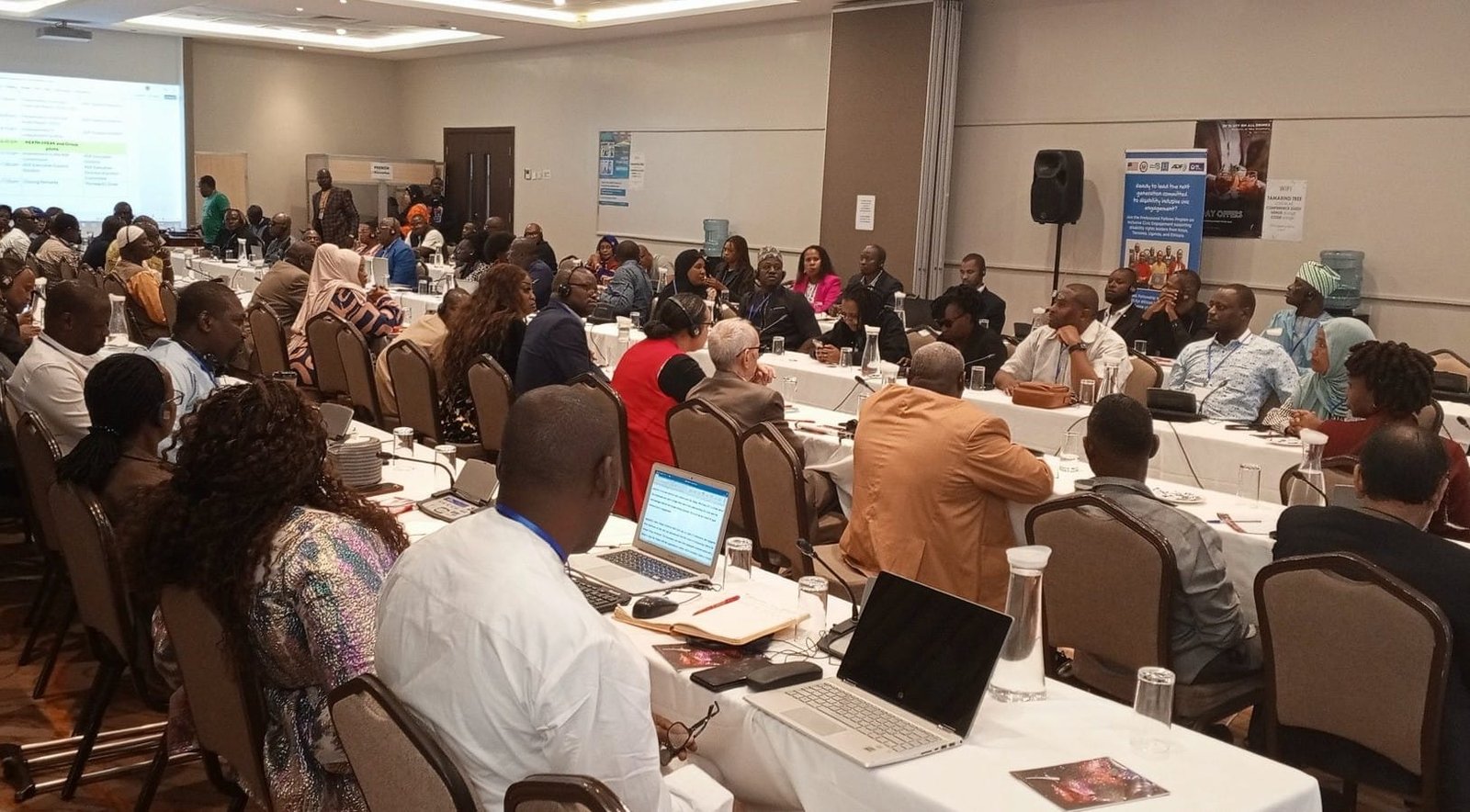
A large group of people sit in a conference room, attentively listening and taking notes. Some have laptops open. Posters and presentation slides are visible on the walls.

The General Assembly, a key event in the ADF’s calendar, serves as an essential platform for reviewing the organization’s progress, discussing strategic directions, and making critical decisions for the future. The agenda for this year’s assembly included the presentation of the ADF’s narrative and financial reports, the audit report, and the highly anticipated election of a new Executive Council who will steer the organization over the next four years.

During the assembly, the ADF secretariat presented a comprehensive narrative report, showcasing the organization’s achievements over the past four years. Key milestones highlighted included successful advocacy efforts for the rights of persons with disabilities across Africa, capacity-building initiatives for member organizations, and strategic partnerships that have enhanced the visibility and impact of disability inclusion on the continent.

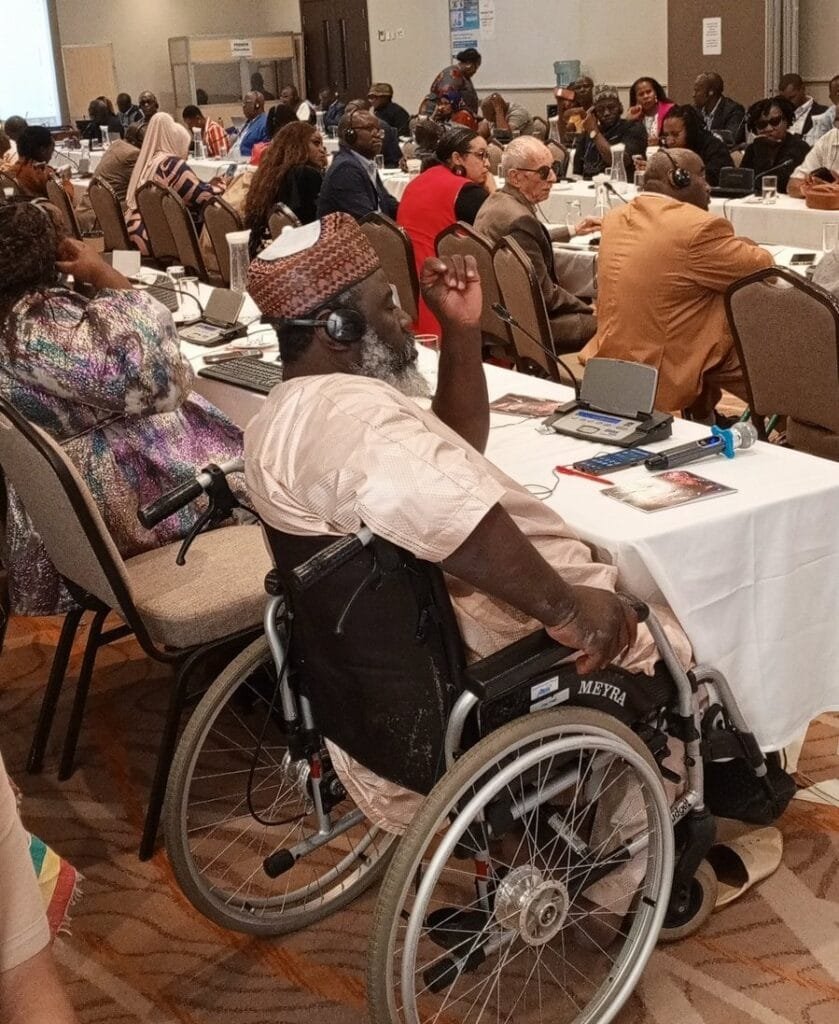
ADF Chair Idriss Maiga in a wheelchair participates in a conference session, surrounded by other attendees seated at tables covered with documents and laptops. Everyone appears engaged in the discussion.

The financial report and audit report were also presented, reflecting the organization’s commitment to transparency and accountability. These reports provided a detailed overview of the financial health of the ADF, underscoring the prudent management of resources and the effectiveness of its financial controls.

The assembly concluded with the election of a new Executive Council. The newly elected council consists of nine members, bringing together a diverse group of leaders with extensive experience and a deep commitment to advancing the rights and well-being of persons with disabilities in Africa. Notably, five members of the outgoing Executive Council were re-elected, ensuring continuity and the retention of valuable institutional knowledge. Accordingly, the new Executive Council comprises of:

  1. Idriss Alzouma Maiga: Chair
  2. Fatma Wangare Haji: Vice-Chair
  3. Auberon Jeleel Odoom: Secretary General
  4. Ayassou Komivi: Treasurer
  5. Eric Ngondi: Representative of Youth with Disabilities
  6. Emmanuelle Tchotchom: Representative for Women with Disabilities
  7. Indouma Olivier: Representative of Elderly Persons with Disabilities
  8. Mohammed Ali: Representative of Families having a Member with a Disability
  9. Cantol Alexandre Ponja: Representative of the Under-Represented

The Executive Council members are expected to play a pivotal role in guiding the ADF through its next phase of growth, focusing on strengthening member organizations, expanding advocacy efforts, and enhancing partnerships with regional and international stakeholders.

As the ADF moves forward under the leadership of the newly elected Executive Council, the organization remains dedicated to its mission of promoting, protecting and advocating for the rights of persons with disabilities across Africa. The outcomes of the General Assembly, including the renewed leadership and strategic discussions, position the ADF to continue its vital work in empowering persons with disabilities and ensuring their full inclusion in all aspects of society.

The African Disability Forum extends its gratitude to all participants, partners, and donors who contributed to the success of this General Assembly. With their continued support, the ADF is well-positioned to build on its achievements and drive positive change for persons with disabilities across the continent.

Mr. Shuaib Chalklen – Executive Director

African Disability Forum

02 September 2024