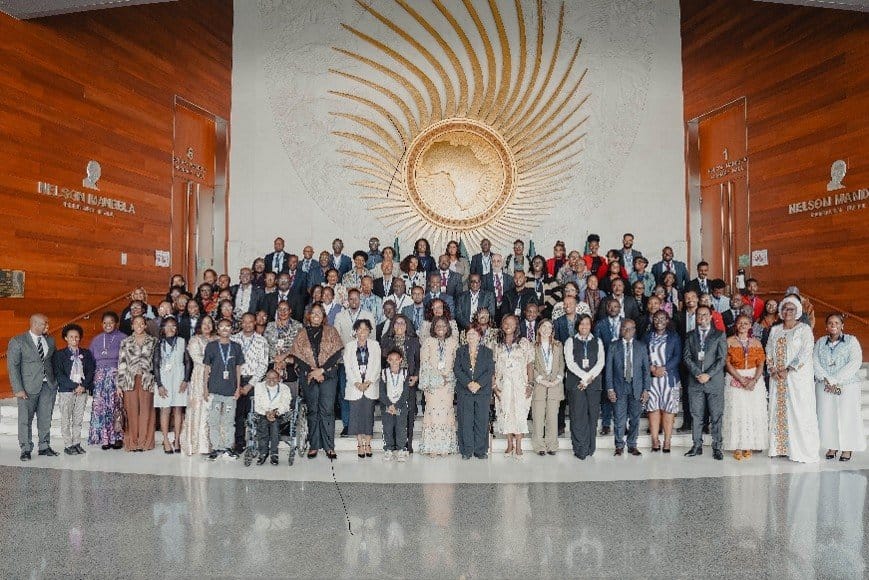
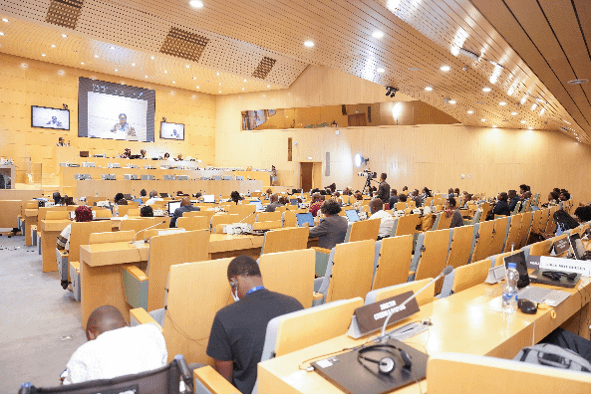
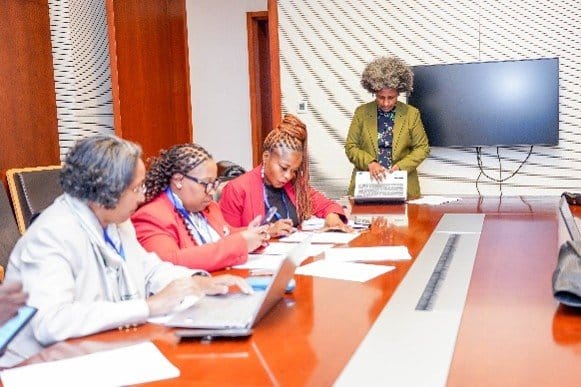
The African Disability Forum (ADF) participated in the NGO Forum preceding the 89th Ordinary Session of the African Commission on Human and Peoples’ Rights (ACHPR), held from 8–10 October 2026 in Dakar, Senegal. The Forum focused on the overarching theme of Water, Sanitation, Climate Justice and Human Rights.
As part of the NGOS Forum, the African Albinism Network (AAN), one of ADF’s 10 Pan-African member organizations, organized a session titled “Invisible in the Climate Crisis: The Impact of Climate Change on the Human Rights of Persons with Disabilities, Including Persons with Albinism, in Africa.”
During the session, Ms. Shitaye Astawes, ADF Director for Advocacy and Communication, spoke on “Disability, Gender and Climate Justice: Building Inclusive Health, Water and Sanitation Systems.”
Her speech highlighted how existing climate change actions, health, water and sanitation systems continue to exclude persons with disabilities, particularly women and girls with disabilities making them vulnerable to health risks, abuse and harassment. She also emphasized the importance of making these essential services accessible and inclusive in practice, ensuring that persons with disabilities are not left behind in climate change actions and responses to climate-related challenges such as early warning mechanisms, mitigation as well adaptation strategies.
Climate justice must be disability-inclusive and gender-responsive. Persons with disabilities, including persons with albinism, must be recognized not only as people affected by the climate crisis but also as active participants in shaping sustainable solutions.
There can be no climate justice without disability inclusion, gender equality and meaningful participation.
The 48th Ordinary Session of the African Committee of Experts on the Rights and Welfare of the Child (ACERWC) is being held in Maseru, Kingdom of Lesotho, from 13 to 20 October 2026. The session brings together approximately 500 participants from nearly 23 countries, including representatives of governments, international non-governmental organizations (INGOs), academia, Foundations, Donors, the African Union Commission (AUC), and other stakeholders.
The session’s agenda covers several important issues related to the protection and promotion of children’s rights in Africa. Key activities include:
Day of General Discussion (DGD) on the theme “Violence Against Children: Navigating the Digital Frontier.”
Presentation of the Draft General Comment on Article 13 of the African Charter on the Rights and Welfare of the Child, focusing on the rights of children with disabilities.
Presentation of the study on the recruitment of children by armed forces and armed groups in Africa.
Presentation on the commemoration of the Day of the African Child 2026 and selection of the theme for 2027.
Consideration of State Party reports from Egypt, The Gambia, Libya, and Mauritania.
Consideration of complementary reports submitted by civil society organizations (CSOs) on State Party reports from Sierra Leone, Côte d’Ivoire, and Cabo Verde.
Consideration of pending communications and adoption of decisions.
The session also features a briefing on the status of the Common Africa Position on Ending Violence Against Children (CAP-EVAC), underlining the importance of strengthening Africa’s collective action to end violence against children.
For the first time, the African Disability Forum (ADF) is represented at the session by its Program Director, alongside Inclusion Africa (IA), represented by its Program Manager.
Drawing on its observer status with the Committee, Inclusion Africa delivered a statement highlighting the importance of ensuring that children with intellectual disabilities are fully included in the implementation and monitoring of children’s rights across Africa.
The statement emphasized four key priorities: Inclusive education, Protection, Meaningful participation and Accountability.
Among other issues, a presentation was made on the Draft General Comment on Article 13 concerning the rights of children with disabilities. The document is still at the drafting stage and, before being widely disseminated, will be made publicly available for comments and consultations with children. ADF commended the work undertaken, reaffirmed its commitment to providing comments once the draft is received, and used the opportunity to call on the African States represented at the meeting to ratify the African Disability Protocol.
IA raised questions about how the document would ensure the meaningful participation of children with intellectual disabilities in decisions affecting their lives, including through Easy Read information and appropriate communication methods. It also sought clarification on the concrete measures to be recommended to Member States to ensure effective implementation and monitoring. Furthermore, IA highlighted the need for the General Comment to address the specific needs of girls with intellectual disabilities and children with disabilities living in poverty, rural communities, conflict-affected areas, and humanitarian settings.
ADF considers this an important opportunity to strengthen its engagement and future collaboration with the ACERWC. ADF reaffirms its commitment to working closely with the Committee and other stakeholders to promote and protect the rights of children with disabilities across Africa, ensuring that no child is left behind.
The African Disability Forum (ADF) participated in the ARISE Africa II Convening on Advancing the Common African Position on Ending Violence against Children and the Validation of the African Union Model Law on Child Online Safety, held from 16–17 July 2026 at the African Union Headquarters in Addis Ababa, Ethiopia.
The two-day convening brought together representatives from African Union Member States, Regional Economic Communities, development partners, civil society organizations, children and young people, including youth with disabilities, and other key stakeholders to review and validate two important continental frameworks aimed at strengthening child protection across Africa.
The meeting focused on developing a unified African approach to ending violence against children while also validating the proposed African Union Model Law on Child Online Safety. As digital technologies become increasingly integrated into children’s lives, the discussions emphasized the need for policies that protect children both offline and online while promoting their rights, participation, and well-being.
As the continental representative organization of persons with disabilities in Africa, ADF actively contributed to both plenary and breakout discussions, advocating for the meaningful inclusion of children and youth with disabilities throughout the proposed frameworks.
During the deliberations, ADF emphasized that children with disabilities continue to face disproportionate risks of violence, abuse, neglect, and exclusion. The Forum called for disability inclusion to be intentionally integrated across all policy and legislative frameworks rather than treated as a separate consideration. This includes ensuring that prevention, protection, reporting, response, and justice mechanisms are accessible and responsive to the diverse needs of children with disabilities.
ADF also highlighted the importance of recognizing the voices and lived experiences of children and young people with disabilities in policy development. Meaningful participation, the Forum noted, is essential to ensuring that continental frameworks respond effectively to the realities faced by all children and leave no one behind.
The Forum welcomed the African Union Commission’s efforts to create space for youth with disabilities to participate in the convening, recognizing this as an important step towards more inclusive policymaking. The participation of young persons with disabilities enriched the discussions and reinforced the value of ensuring that those most affected by policy decisions are represented in decision-making spaces.
At the same time, ADF noted opportunities to further strengthen accessibility at future African Union events. While important progress has been made in promoting inclusive participation, ensuring fully accessible venues, information, communication, and event logistics remains essential for enabling the full and effective participation of persons with disabilities. Accessibility should be embedded from the earliest stages of planning to ensure that no participant is excluded.
The validation of the Common African Position on Ending Violence against Children and the African Union Model Law on Child Online Safety represents an important milestone in advancing child rights across the continent. ADF believes that these frameworks will be significantly strengthened by embedding disability inclusion as a cross-cutting principle, ensuring that children with disabilities enjoy equal protection, equal participation, and equal access to justice and support services.
ADF remains committed to working alongside the African Union, development partners, and other stakeholders to advance inclusive policies that uphold the rights of all children, including children with disabilities. Through continued advocacy and collaboration, the Forum will continue to champion disability-inclusive legislation, accessible systems, and meaningful participation to ensure that every child can live free from violence and thrive in an inclusive society.
The African Disability Forum (ADF) convened its staff members in Addis Ababa on 8th May 2026, for an organizational refresher training on safeguarding. Facilitated by the ADF Safeguarding Focal Person, the session reinforced the organization’s commitment to maintaining safe, inclusive, and accountable working environments across all operations and partnerships.
The training brought together staff working across ADF’s wide array of programs and initiatives, to strengthen their understanding of ethical conduct, reporting procedures, and survivor-centered approaches. Participants also reflected on the vital importance of preventing sexual exploitation, harassment, and all forms of harm within the communities ADF serves.
During the session, staff engaged in comprehensive risk management discussions, identifying potential vulnerabilities within programs, communications, and workplace interactions. The group developed practical mitigation measures, assigned responsible focal persons, and established clear timelines for follow-up actions.
This interactive exercise allowed staff to collectively bridge safeguarding gaps and strengthen internal accountability. It underscored the necessity of proactive prevention and coordinated response systems to ensure the wellbeing of everyone engaging with the organization.
Speaking during the session, ADF leadership reaffirmed a zero-tolerance stance against any form of abuse or misconduct. Staff were encouraged to continue fostering a culture of integrity, professionalism, and respect in every aspect of their work.
By hosting this refresher, ADF continues to demonstrate its commitment to embedding robust institutional safeguarding at all levels. The organization remains dedicated to enhancing the capacity of its staff and partners to uphold the highest standards of human rights and organizational integrity across Africa.
The African Disability Forum (ADF) continues to advance disability rights across Africa through strategic partnerships, capacity building, and advocacy initiatives. As part of the Right in Action (RiA) project, ADF conducted a three-day mission in Abuja Nigeria, from 30th March to 1st April 2026, reinforcing its commitment to strengthening Organizations of Persons with Disabilities (OPDs) and promoting inclusive development.
Mission participants pose for a photo in Abuja, Nigeria
Representing ADF, Mr. Abebaw Abebe, Senior Program Manager and project focal point, led a series of engagements designed to enhance advocacy capacity, deepen understanding of disability rights frameworks, and strengthen collaboration among stakeholders working to advance inclusion. The mission combined technical training, policy dialogue, and multi-stakeholder engagement, with a strong focus on practical learning and impact.
The first component of the mission focused on strengthening the capacity of OPDs and local partners participating in the Right in Action project. The training, supported by Inclusion Africa, a member of ADF and partner in the Right in Action Project, brought together a diverse group of participants, including representatives of under-represented groups such as persons with intellectual disabilities, their families, and grassroots organizations.
Participants were introduced to key international and global frameworks, including the UN Convention on the Rights of Persons with Disabilities (UN CRPD), and explored the application of a human rights-based approach to disability inclusion. The sessions also highlighted the intersection between disability and the Sustainable Development Goals (SDGs), emphasizing the importance of ensuring that no one is left behind in development processes.
A practical component of the training focused on the “Listen, Include, and Respect” strategy, which promotes meaningful participation of persons with intellectual disabilities in meetings and decision-making spaces. Participants also discussed global advocacy platforms such as the Global Disability Summit, gaining insights into how global commitments can be translated into national-level action.
Mission participants engaging with a presentation in Abuja, Nigeria
Spotlight on 1 April: Advancing Regional Advocacy through the African Disability Protocol
A major highlight of the mission was the dedicated session held on 1 April, where ADF delivered an in-depth training on regional advocacy frameworks, with particular focus on the African Disability Protocol (ADP). This session provided participants with a comprehensive understanding of the Protocol, including its origins, objectives, articles and significance within the African context. The discussion emphasized how the ADP complements and reinforces the UN CRPD, while also addressing unique regional realities that affect persons with disabilities across Africa.
Participants explored critical questions such as why the ADP matters, how it can be used as an advocacy tool, and what role OPDs can play in promoting its ratification, domestication, and implementation at national level. The session went beyond theory, offering practical guidance on how to engage policymakers, build coalitions, and influence policy processes.
In addition, the session introduced participants to broader continental frameworks such as Agenda 2063, highlighting the importance of aligning disability advocacy with Africa’s long-term development agenda. This helped participants understand how disability inclusion fits within wider socio-economic and political priorities on the continent.
Advocacy was a central theme throughout the day. Participants engaged in discussions on what constitutes effective advocacy, including the importance of evidence-based approaches, strategic communication, and coalition building. The session also emphasized the need for OPDs to move beyond participation to actively shaping policies and holding duty bearers accountable.
Reflecting on the purpose of the mission, Mr. Abebaw Abebe noted:
“Building the capacities of OPDs that are members of ADF is one of the focus areas of ADF. Fortunately, the Right in Action project provides space for ADF to actively contribute in this regard. That is why I came to Nigeria—to engage directly with OPDs, strengthen their skills in effective advocacy, and enhance their understanding of regional disability rights instruments such as the African Disability Protocol. ”
This hands-on engagement underscored ADF’s commitment to equipping its members with the knowledge and tools needed to drive change at national and regional levels.
Promoting Inclusive Education through Multi-Stakeholder Engagement
On 31 March, the mission also facilitated a major stakeholder convening under the theme: “Strengthening Inclusive Education Policy Implementation.” The event brought together a wide range of actors, including OPDs, families of persons with disabilities, caregivers, and organizations working with under-represented groups. The convening created an important platform for dialogue on the current realities of inclusive education in Nigeria. A keynote session examined both progress and persistent gaps in policy implementation, while an awareness-raising session addressed stigma and misconceptions surrounding intellectual disabilities. An advocacy-focused session highlighted the critical role of parents, caregivers, and communities in advancing inclusive education. Participants shared experiences and identified practical ways to support children with disabilities in accessing quality education. Through breakout discussions, participants identified key barriers to inclusive education and proposed community-driven solutions. A panel discussion on “From Policy to Practice” further explored the systemic changes required to ensure that policy commitments translate into meaningful outcomes on the ground.
The mission to Nigeria demonstrated the power of combining capacity building, policy engagement, and multi-stakeholder dialogue. By focusing on both knowledge development and practical application, the mission contributed to strengthening the advocacy capacity of OPDs and enhancing collaboration among key actors.
The strong emphasis on the African Disability Protocol and regional advocacy frameworks marked an important step in bridging the gap between global commitments and regional action. It also reinforced the role of OPDs as key drivers of change in advancing disability rights.
Through the Right in Action project, ADF continues to play a central role in connecting local experiences with regional and continental advocacy processes. The mission reflects ADF’s broader vision of a strong, coordinated, and empowered disability movement across Africa.
As ADF and its partners move forward, the knowledge, partnerships, and momentum generated from this mission will contribute to more effective advocacy, stronger institutions, and greater inclusion of persons with disabilities in all aspects of society.
The African Disability Forum (ADF) participated in a three-day Diversity, Equity, and Inclusion (DE&I) training held on March 9 -11 in Hyderabad, India, organized by JICA, HERALBONY, and WE Hub.
Unlike traditional lecture-based trainings, the program used an interactive game called PEACE, inspired by Tsudoi no Syūkan (The Habit of Gathering) by Teppei Kasahara, to explore the concept of equity. The sessions targeted CEOs, HR professionals, and women entrepreneurs and encouraged creativity, empathy, and reflection through engaging activities.
ADF was represented by Mrs. Bethelehem Zewde, who also had the opportunity to present an overview on Disability status in Africa, Ethiopia and ADF, visit NGOs, and network with startups in India.
ADF sincerely thanks JICA for this opportunity and congratulates HERALBONY and WE Hub for their inspiring work. We look forward to seeing similar initiatives introduced in Africa to help transform narratives around disability and persons with disabilities.
On 9–20 March 2026, the African Disability Forum (ADF) participated in the 70th session of the Commission on the Status of Women, held at the United Nations Headquarters. The session convened representatives of Member States, UN entities, and civil society organizations from across the globe to advance gender equality and the empowerment of women and girls.
This year’s session focused on strengthening access to justice for all women and girls, including through promoting inclusive and equitable legal systems, eliminating discriminatory laws and practices, and addressing structural barriers that hinder equal access.
During the session, ADF amplified the voices and lived experiences of women and girls with disabilities, emphasizing the urgent need for justice systems that are inclusive, accessible, and responsive to their realities.
In her keynote address, Shitaye Astawes, ADF’s Head of Advocacy and Communications, underscored the importance of ensuring that justice systems are designed to serve everyone. She highlighted the persistent structural barriers that prevent women with disabilities from accessing justice and called for transformative action to uphold their rights.
The full speech is presented below.
Women with Disabilities and Access to Justice
Thank you for the warm introduction. I am honored to speak on this panel.
Justice should be one of the most basic guarantees of equality. Yet for many women with disabilities, justice remains out of reach, not because laws do not exist, but because systems were never designed with them in mind.
Across the world, while contexts may differ, one reality remains consistent: being a woman, and more so a woman with a disability, means facing multiple and intersecting forms of discrimination within justice systems.
Consider these realities:
A woman with an intellectual disability is denied justice in a rape case because she is deemed unable to testify.
A deaf woman experiencing domestic violence cannot report abuse because there is no sign language interpreter at the police station.
A blind woman receives court documents she cannot read.
A woman with a psychosocial disability, a survivor of sexual violence, is barred from testifying due to laws that label her as of “unsound mind.”
A wheelchair user arrives at court only to find there is no accessible entrance.
These are not isolated incidents. They are everyday occurrences. They reflect deep structural barriers that prevent women with disabilities from accessing justice. When their voices are dismissed or ignored, perpetrators act with impunity.
Justice cannot depend on whether a woman can hear a police officer, read court documents, climb courthouse stairs, or communicate in ways the system expects. For justice to be meaningful, the system itself must adapt. It must be inclusive by design.
Women with disabilities must be able to report violence, be heard in court, and seek protection under the law. When justice systems become accessible to women with disabilities, they become stronger and more equitable for everyone.
Under the Convention on the Rights of Persons with Disabilities, States are obligated to ensure equal access to justice for persons with disabilities through procedural accommodations and accessible legal systems. However, this right remains far from being realized.
Across many countries, common barriers persist:
Lack of procedural accommodations in legal proceedings
Limited access to accessible information and communication
Inaccessible court buildings and police facilities
Prejudice and harmful stereotypes among judges and law enforcement
Laws that deny legal standing or testimony to persons with disabilities
Limited access to legal aid and support services
These barriers disproportionately affect women and girls with disabilities, particularly those experiencing gender-based violence.
Let us consider this:
A teenage girl with an intellectual disability is forcibly sterilized; her bodily autonomy and legal capacity violated, with the decision made on her behalf.
What must be done to ensure she can access justice?
If we cannot answer that question, and act on it, then we have truly failed in achieving justice for all.
“We Give to Gain”: Empowering Women with Disabilities in Africa for International Women’s Day 2026
March 8, 2026
On this International Women’s Day 2026, the world unites under the theme “We Give to Gain.” It’s a powerful reminder that progress is not a zero-sum game. When we share knowledge, resources, and platforms, everyone rises. For women with disabilities across Africa, this message is a lived reality.
These women navigate a maze of intersecting barriers: gender discrimination, disability stigma, and systemic inequality that too often renders them invisible. Yet here is what the data reveals. When empowered, they do not just survive; they transform communities. According to UN Women, women with disabilities in developing nations face 80% higher poverty rates than their non-disabled peers, and in Africa specifically, less than 20% of girls with disabilities complete primary education compared to over 50% of their non-disabled counterparts. The loss is not just personal but societal and economic. The World Bank estimates that excluding people with disabilities costs African countries 3-7% of GDP annually.
But numbers only tell half the story.
Imagine a rural teacher in Cameroon, blind since childhood, who now trains dozens of educators to integrate assistive technology into their classrooms. Or a Kenyan activist navigating Nairobi’s uneven street in her wheelchair while rallying thousands for accessible healthcare. These aren’t exceptional cases. They’re the pulse of the Africa Disability Forum (ADF), where women lead from the front.
Persistent gendered barriers continue to marginalize women and girls with disabilities: patriarchal norms that silence their voices, inaccessible environments, and institutional and communication barriers that exclude them from decision-making spaces. Despite these constraints, they continue to push forward, claiming their rights and engaging in development processes. When women with disabilities mentor other women and girls with disabilities in advocacy, when they share strategies for navigating complex and exclusionary systems, and when they cultivate networks of mutual support, they are doing more than volunteering their time they are investing in a transformative multiplier effect that strengthens the collective power of women with disabilities. The African Disability Forum (ADF) has put this philosophy into action through structured mentorship programs. Women with disabilities acquire concrete skills in policy advocacy, coalition-building, and leadership gaining the confidence to claim space in decision-making processes. This is evident in the growing ranks of disabled women serving on national disability councils, shaping policies, and championing the ratification and implementation of the Protocol to the African Charter on the Rights of Persons with Disabilities in Africa (ADP).
This “giving” fundamentally shifts the narrative. It dismantles the outdated “charity model” that positions women with disabilities as passive recipients, replacing it with “rights-based empowerment”. When a woman with a disability trains her peers in digital accessibility, she builds professional authority and political visibility. When she advocates for inclusive education, she forges networks that endure beyond any single campaign. The gains multiply for her, her community, and the continent at large.
A gender lens underscores the urgency: Article 23 of the Maputo Protocol explicitly guarantees the rights of women with disabilities, yet implementation gaps across Africa. SDG 5 (gender equality) and SDG 10 (reduced inequalities) require intersectional approach, but disability is too often sidelined. Accessible skills training is not charity, it’s smart economics. International Labour Organization research shows inclusive hiring can boost revenues by up to 30%, while closing the employment gap for disabled women could inject billions into African economies.
On this 2026 International Women’s Day, the call is clear: give boldly. Mentor. Amplify. Fund. Network. Include.
Women with disabilities in Africa are building the future, one mentorship session, one policy dialogue at a time. Their full participation doesn’t just empower them; it forges societies where every woman thrives.
Today, we do not just celebrate these trailblazers. We commit to amplify the cause.
The African Disability Forum (ADF) is participating in the annual learning and sharing event of the Rights in Action project, happening in Zimbabwe. The event, which commenced today, 19 February and concludes tomorrow, bringing together project partners, local Organizations of Persons with Disabilities (OPDs), and other stakeholders to reflect on progress, exchange experiences, and strengthen collective strategies for advancing disability rights.
Rights in Action is a transformative, OPD-led disability rights advocacy project that has been implemented since 2025 in Zimbabwe and Nigeria. The project is financed by the Ministry of Foreign Affairs of Finland and facilitated by CBM Global, in partnership with ADF, Zimbabwe’s OPD federation (FODPZ), Inclusion Africa, Nigeria’s OPD federation (JONAPWD), and other local OPDs and actors.
The overall objective of the project is to ensure that OPDs in both countries, including those representing under-represented groups, are strengthened to promote and protect the human rights of persons with disabilities at local, national, regional, and international levels. The project’s theory of change is anchored on strengthening OPDs, enabling joint and coordinated advocacy, influencing policies, and ultimately realizing disability rights.
Since its inception, Rights in Action has focused on enhancing OPDs’ organizational capacity, advocacy skills, and ability to engage meaningfully with duty bearers. The annual learning and sharing event in Zimbabwe provides a vital space for partners to review achievements, discuss challenges, and draw lessons from coordinated advocacy efforts at different levels. It also fosters cross-learning among OPDs and reinforces solidarity within the disability movement.
ADF is represented at the event by Abebaw Abebe, who is participating virtually. Through this engagement, ADF is contributing regional perspectives, promoting cross-country learning, and reinforcing the importance of strong continental and global linkages in advancing disability-inclusive policies and practices.
One of ADF’s key contributions to the Right in Action project is the documentation and dissemination of success stories, lessons learned, and case studies from OPDs across different regions. By sharing practical advocacy experiences and evidence of change, ADF aims to inspire confidence among participating OPDs, particularly those from under-represented groups, and demonstrate that coordinated, rights-based advocacy can lead to tangible policy and social transformation. These shared experiences also serve as valuable learning tools that strengthen collective advocacy and amplify the voices of persons with disabilities beyond national boundaries.
Through initiatives such as Rights in Action, ADF continues to advance its mandate of strengthening OPDs, promoting joint advocacy, and connecting local disability rights efforts to regional and international human rights platforms. ADF commends all partners for their commitment and looks forward to continued collaboration to ensure that the rights of persons with disabilities are fully realized across Africa and beyond.
The African Disability Forum (ADF) continued to strengthen its advocacy for disability-inclusive climate actions throughout 2025. Building on its initial participation during the Twenty-Seventh Conference of the Parties (COP27) in Sharm El-Sheikh, Egypt, ADF expanded its engagement to regional commitment and contribution at global disability inclusive climate platforms. These engagements facilitate meaningful participation and representation of persons with disabilities in disability inclusive early warning system, mitigation strategies and disability inclusive finance for adaptation as well as climate negotiations, policies, and decision-making processes.
Regional Engagement and Achievements
ADF’s engagement with the United Nations Economic Commission for Africa’s (UNECA) African Climate Policy Centre and its participation at the Thirteenth Conference on Climate Change and Development in Africa (CCDA-XIII) marked a significant milestone. Held from 5–7 September 2025, as a pre-summit to the Second Africa Climate Summit under the theme “Empowering Africa’s Climate Action with Science, Finance, and Justice,” the conference concluded with a disability-inclusive Outcome Document that, at least, features three explicit references to persons with disabilities for the first time.
Key achievements included:
The first-time participation of the ADF Secretariat delegation
Mobilization and technical support provision to the participation of National Umbrella Organizations of Persons with Disabilities (OPDs); and local disability non-government organization
Successful co-organization of the hybrid side event titled “Leave No One Behind: The Intersect Between Climate, Disability, and Gender” and collaboration with UNCEF, WFP and ADF members.
Engagement at CoP30: Week Two Participation
During the second week of the conference, ADF actively participated and contributed to the effort of demanding for formal recognition of the Disability Caucus as a constituency under the United Nations Framework Convention on Climate Change (UNFCCC). Notable contributions included:
Collaborating with International Disability Alliance (IDA) and other Disability Caucus members to coordinate and promote disability inclusion;
Speaking at the Global Disability Fund side event titled “Scaling Disability-Responsive Solutions for a Resilient Future”;
Facilitating OPDs participation at the Consortium for Climate Change Ethiopia (CCC-E) and Pan African Climate Justice Alliance (PACJA) side event on “People with Disabilities and Climate Action: Experiences from Ethiopia, Kenya, Nigeria, Senegal, and Burkina Faso” where Mr. Bonface Massah, Executive Director of the Africa Albinism Network and the Commissioner at the Malawi Human Rights Commission featured;
Chairing part of the Disability Caucus Daily Review Meeting;
Meeting with the Nigerian delegation, together with JONAPWD representatives, to advocate for formal recognition of the Disability Caucus constituency;
Participating in key technical and thematic side events, including:
Urban Planning Policy to Boost Equity, Mobility, Physical and Mental Health in the Context of Climate Change
Bridging the Gender Gap: Advancing Gender Equality in Climate Action
Opportunity Cost of African Expenditures on Climate Change
undertaking targeted lobby and policy advocacy engagements with UNECA and the African Development Bank (AfDB).
Strategic Partnerships
ADF’s advocacy efforts were undertaken in collaboration with key partners, including:
the International Disability Alliance (IDA)
UNECA’s Africa Climate Policy Centre
Pan-African Climate Justice Alliance (PACJA)
Development Initiatives
Disability Climate Caucus
National umbrella member organizations of Persons with Disabilities (OPDs) and other stakeholders.
Institutional Commitment
ADF remains committed to advancing the rights and inclusion of persons with disabilities in regional and global climate and development processes. This includes continued advocacy for:
Recognition of the Disability Caucus as a formal UNFCCC constituency;
Inclusion of disability rights into climate policies, legal frameworks, and financing instruments; and
Disability-inclusive development to reduce poverty and mitigate the impacts of climate