The 6th Ordinary Session of the African Union Specialized Technical Committee on Social Development, Labour and Employment (STC-SDLE-6), held in Windhoek, Namibia, from 27th –30th July, marked a significant milestone in advancing inclusive social protection across Africa. Convened under the theme, “Investing, Strengthening and Expanding Social Protection Systems in Africa: A Critical Enabler for Inclusion, Resilience and Social Justice,” the session placed disability inclusion firmly at the center of discussions on social development and policy reform.
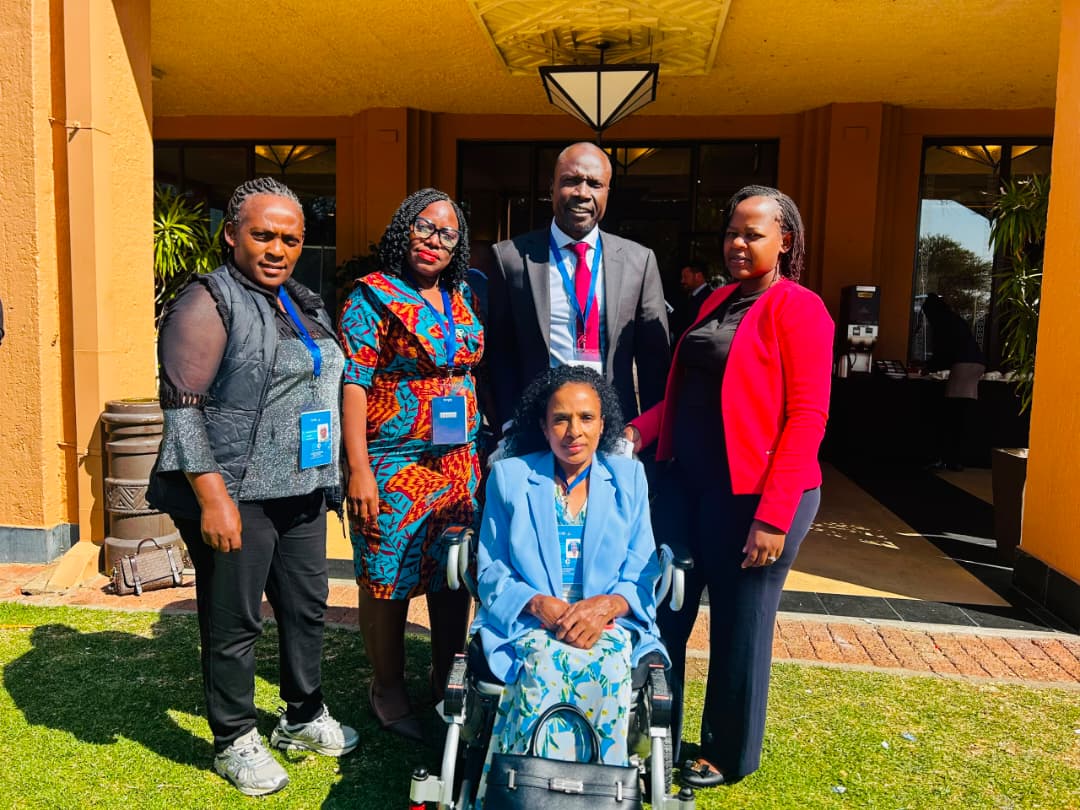
The African Disability Forum (ADF), with support from the GIZ-ADF Bridge Project, was represented by Executive Council Member Ms. Tungi Kenny and Director of Advocacy and Communication Ms. Shitaye Astawes. They joined representatives from the African Union, German Corporation for International Cooperation -GIZ, UNICEF, UN Women, Plan International, and other development partners in shaping dialogue on strengthening inclusive social protection systems across the continent.
Throughout the session, delegates examined the current state of social protection in Africa, identifying existing gaps, implementation challenges, and opportunities for policy reform. Discussions reaffirmed that inclusive social protection is not merely a welfare intervention but a fundamental human right and a powerful instrument for promoting equality, and social justice.
One of the defining achievements of the STC-SDLE-6 was the unprecedented attention given to disability inclusion. Under the thematic discussions on inclusive social development—including ageing, disability inclusion, family, social protection, and social policy—Member States and stakeholders deliberated on several landmark initiatives aimed at strengthening the rights and inclusion of persons with disabilities.
Key agenda items included:
- The proposed designation of an African Union Champion on Disability Inclusion and Rights and the appointment of a Special Envoy on the Rights and Protection of Persons with Albinism.
- Consideration of African Sign Language as the seventh official working language of the African Union, a landmark proposal intended to advance linguistic inclusion and accessibility across AU institutions.
- Presentation of the African Union Joint Commitment Framework on Advancing the Rights and Social Inclusion of Persons with Disabilities, consolidating commitments made before the Amman-Berlin Declaration and pledges by 20 AU Member States during the Global Disability Summit.
- Progress updates on implementing the Regional Economic Community Focal Point Model on Disability Inclusion.
- Discussions on the status of ratification of African Union protocols relating to social protection, social security, older persons, and the rights of persons with disabilities.
- Briefings on the proposed African Union Plan of Action on Disability Inclusion and Rights, alongside broader discussions on ageing, long-term care systems, family policy, and social development.
Among the most notable outcomes was the proposal to recognize African Sign Language as the African Union’s seventh official working language. If adopted, this initiative would represent a transformative step towards ensuring greater accessibility, participation, and equal representation for Deaf persons across the continent. The proposal will now require endorsement by AU Member States at the national level before progressing through the Union’s decision-making processes.
High-level ministerial discussions also underscored the growing recognition of social protection as a strategic investment capable of strengthening social cohesion, reducing poverty, addressing inequalities, and fostering sustainable development.
The discussions built upon existing continental commitments, including Agenda 2063, the African Disability Protocol, and years of advocacy by Organisations of Persons with Disabilities (OPDs). Together, these frameworks continue to encourage governments to integrate disability inclusion into national social protection policies, legislation, and programmes.
For ADF, participation in the STC-SDLE-6 reinforced its commitment to influencing continental policy processes and ensuring that the voices of persons with disabilities remain central to Africa’s development agenda. The Forum will continue working alongside governments, regional institutions, development partners, and OPDs to promote inclusive policies that leave no one behind.
Following the STC-SDLE-6, ADF also participated in the Pan-African Women’s Day High-Level Breakfast on 31 July 2026, held under the theme “Women’s Action for Safe Sanitation, Peaceful Communities and Better Livelihoods.” The event further highlighted the interconnectedness of gender equality, disability inclusion, social protection, and sustainable development across Africa.
Click the links below to access the session reports:
- https://africandisabilityforum.org/wp-content/uploads/2026/08/6TH-ORDINARY-SESSION-OF-THE-SPECIALISED-TECHNICAL-COMMITTEE-ON-SOCIAL-DEVELOPMENT-LABOUR-AND-EMPLOYMENT-STC-SDLE-6-DRAFT-REPORT-OF-THE-MINIS.pdf
- https://africandisabilityforum.org/wp-content/uploads/2026/08/6TH-ORDINARY-SESSION-OF-THE-SPECIALISED-TECHNICAL-COMMITTEE-ON-SOCIAL-DEVELOPMENT-LABOUR-AND-EMPLOYMENT-STC-SDLE-6-REPORT-OF-THE-EXPERTS-MEE.pdf