The African Continental Free Trade Area (AfCFTA) represents a monumental shift in Africa’s economic landscape, but its true potential can only be realized when regional development is genuinely inclusive.
To champion this vision, the African Disability Forum (ADF) actively participated in the 7th COMESA Federation of Women in Business (COMFWB) Regional Trade Fair and Business Conference, held in Tunis, Tunisia, from July 1 to 3, 2026. Convened under the powerful theme, “One Market, One Future: Digital Pathways to Harnessing the African Continental Free Trade Area,” the high-level gathering brought together over 300 delegates, including policymakers, investors, and business leaders, to explore sustainable growth and digital integration across the COMESA region.
ADF’s presence at this forum was a direct reflection of its commitment to advancing the economic empowerment of women with disabilities. The organization was represented by its Senior Gender Officer and Capacity Building Director, alongside five exceptional women entrepreneurs with disabilities from Burundi, Rwanda, Malawi, the Democratic Republic of the Congo, and Ethiopia. Their participation, which put grassroots voices at the center of regional trade discussions, was made possible through the support of the Deutsche Gesellschaft für Internationale Zusammenarbeit (GIZ) under the Bridge Africa Project.
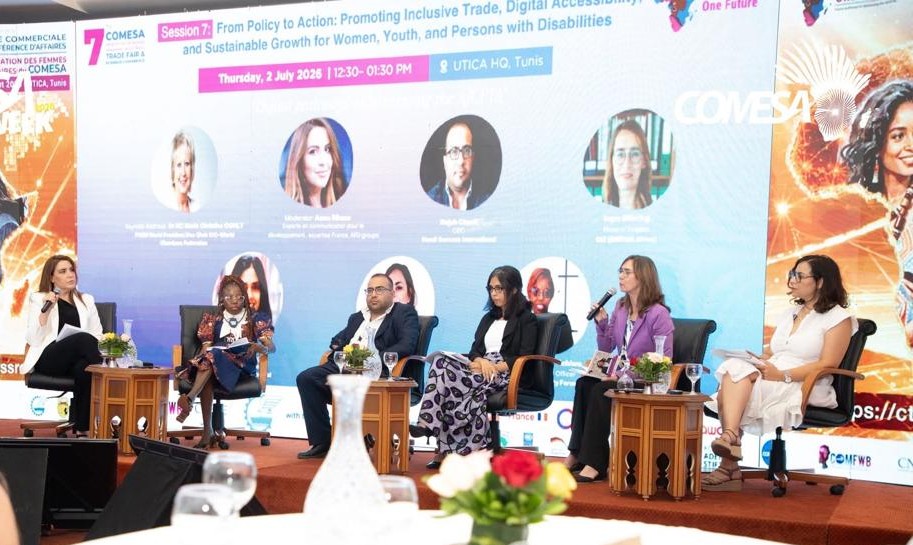
Throughout the three-day event, the delegation actively worked to transition policy discussions into tangible action. A key highlight of this advocacy was the active contribution of ADF’s Senior Gender Officer as a panelist in the session focused on promoting inclusive trade, digital accessibility, and sustainable growth for women, youth, and persons with disabilities. By speaking on this platform, ADF addressed the critical need to design inclusive digital pathways and trade infrastructures that accommodate the unique needs of business owners with disabilities. Beyond policy dialogues, the conference provided a vibrant marketplace for the five sponsored entrepreneurs to expand their commercial reach. They engaged directly in exhibitions, business-to-business matchmaking, and high-level networking with chambers of commerce, business associations, and development partners. These interactions allowed them to showcase their diverse products, explore cross-border trade opportunities, and forge strategic partnerships that prove disability-inclusive enterprises are competitive, resilient, and market-ready.
ADF’s successful participation in Tunis underscores a fundamental truth: women with disabilities are not passive beneficiaries of aid, but are active innovators, employers, and producers driving Africa’s economic transformation. By bridging the gap between trade policy and on-the-ground entrepreneurship, ADF and its partners continue to pave the way for a prosperous continent where no one is truly left behind.